
Democrats’ eight-point lead on the generic congressional ballot lasted exactly 30 days. The latest Harvard CAPS/Harris poll has the 2026 midterm race sitting at a dead-even 50-50 among registered voters. Among likely voters — the people who actually drag themselves to the polls in a midterm — Republicans already lead by four points.
Thirty days. Eight points. Somebody get these people a casket for their “momentum.”
Let’s review what happened in those 30 days. President Trump delivered a State of the Union address that functioned as a prime-time infomercial for the entire Republican agenda — and the American people picked up the phone and ordered. Forty-seven percent of voters watched it. Sixty percent had a favorable reaction. All 11 new policies he announced received majority support. Every. Single. One. Banning Congressional stock trading? Seventy-two percent. Lowering prescription drug prices? Eighty percent. Deporting criminal illegals? Seventy-five percent.
Fifty-one percent of voters said they were MORE likely to vote Republican after watching the speech. Trump went on national television and closed the sale.
And what did Democrats do during the biggest political broadcast of the year? More than 80 of them boycotted the speech and held a sad little rival event at the Lincoln Memorial hosted by Joy Reid and Katie Phang — Joy Reid, whose own network just gutted its DEI department. Hosting a counter-programming event with Joy Reid in 2026 is like launching a Blockbuster franchise in 2015. Bold strategy, Cotton.
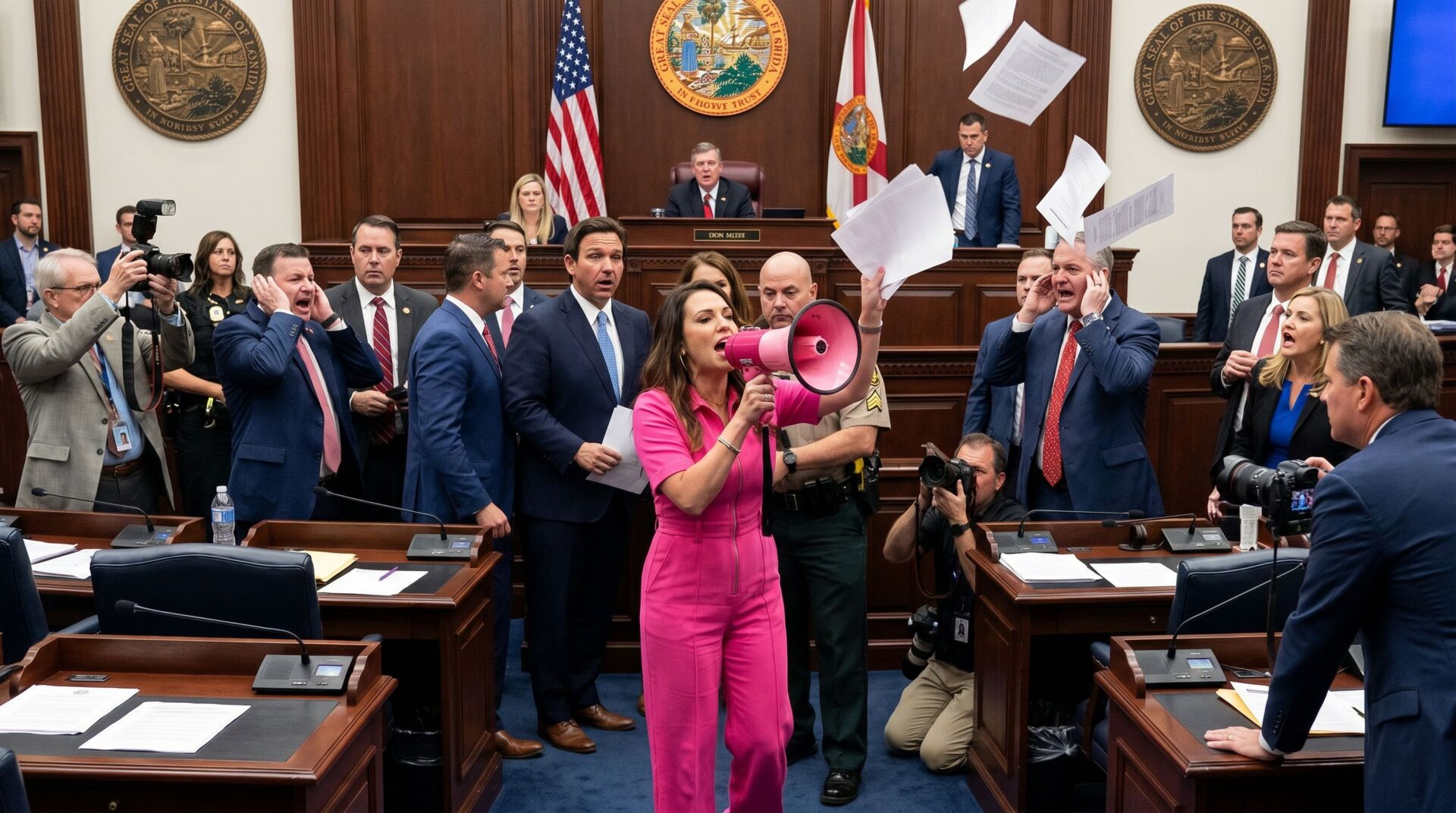
The Democrats who actually showed up for the speech performed even worse. Al Green got himself physically dragged out of the chamber — for the second year running — waving protest signs around like he was at a college football tailgate. Tlaib and Omar heckled the President on national television. And 57% of voters told pollsters the Democrats’ behavior was “out of line.” That 57% includes a LOT of independents who tuned in to see if Democrats could act like grown-ups for two hours. They could not.
Then there was Operation Epic Fury, which gave Trump the kind of foreign policy win that makes presidential historians start rearranging their rankings. Forty-three Iranian ships destroyed. Missile attacks cut 90%. The Supreme Leader is dead. Tim Kaine’s response? He introduced a war powers resolution to stop the whole thing — and the Senate crushed it 47-53, with John Fetterman as the only Democrat to cross the aisle.
When the guy in the hoodie is your party’s voice of reason, something has gone deeply sideways.
Oh, and just in case the Harvard poll wasn’t enough misery for one week — an NBC poll dropped showing that ICE is now more popular than the Democratic Party. ICE: 38% favorable. Democrats: 30%. The agency Democrats spent four years screaming to “abolish” is beating them by eight points with actual voters. Trump himself polls higher than Kamala (41% to 34%), higher than “the Hair Apparent” Gavin Newsom (27%), and higher than Stephen Colbert. (“Why is the late-night comedian less popular than the President? Maybe because the comedian stopped being funny five years ago.”)
Here’s where the history gets ugly for Democrats, and I’ll put my name on this one.
In 2018 — the last real “blue wave” — Democrats held roughly an eight-point lead on the generic ballot in March. That lead held all the way through November. They won the national popular vote by 8.6 points and picked up 40 House seats. But that lead held because the fundamentals backed it up: Trump was deeply underwater on approval, the economy wasn’t giving voters any reason to stay loyal, and Democrats ran disciplined health care campaigns in swing districts. No boycotts. No heckling. No rival events with cable hosts at the Lincoln Memorial.
In 2026? The eight-point lead didn’t survive February. Trump’s approval improved from net minus-6 to minus-3 in a single month. Fifty-two percent say the economy is better now than under Biden, up five points since January. And Democrats just spent their biggest national platform of the year getting ejected from chambers and holding a counter-rally headlined by a woman whose employer is laying people off.
This isn’t 2018. This is 2010 running in reverse.
In 2010, the generic ballot swung hard toward Republicans all spring. Obama sat at about 45% approval — right about where Trump is now. The GOP won the national House popular vote by 6.8 points and gained 63 seats — the biggest swing since 1948. The trajectory was visible by March to anyone paying attention. Democrats convinced themselves the numbers would “come home” by November. They didn’t.
Now look at the gap hiding inside the Harvard poll. Registered voters: 50-50. Likely voters: R+4. That four-point difference is the enthusiasm gap, and in midterm elections, enthusiasm decides who actually shows up. In 2014, polls of registered voters showed a tied race all year long. When pollsters finally switched to likely-voter screens in September, the Republican lead appeared “out of nowhere.” It wasn’t out of nowhere. It was always there — hiding in the gap between people who tell pollsters they’ll vote and people who actually walk into a booth.
Here’s the second-order problem nobody in the Democratic war rooms wants to face: when your generic ballot lead collapses eight months before the election, your candidate pipeline collapses with it. Those ambitious state legislators eyeing a House race? They’re doing the math right now. (“Should I give up my safe state seat to run in a swing district where the wave just died? Let me think about that for exactly zero seconds.”) The donors writing big checks based on a blue-wave narrative? They just watched it evaporate. Money follows momentum, and the momentum just changed addresses.
Prediction markets still have Democrats at 85% to flip the House. Those same markets had Kamala at 95% to be the nominee. The smart money loves a narrative — right up until the data runs it over.
Democrats need three seats to flip the House. Three seats sounds easy. But you don’t flip three seats when your volunteers are demoralized, your donors are recalculating, and your national brand polls at 30% favorable — eight points behind the immigration cops you told America to abolish.
They chose performance over persuasion. The Harvard poll just handed them the receipt. And we’re only in March.