
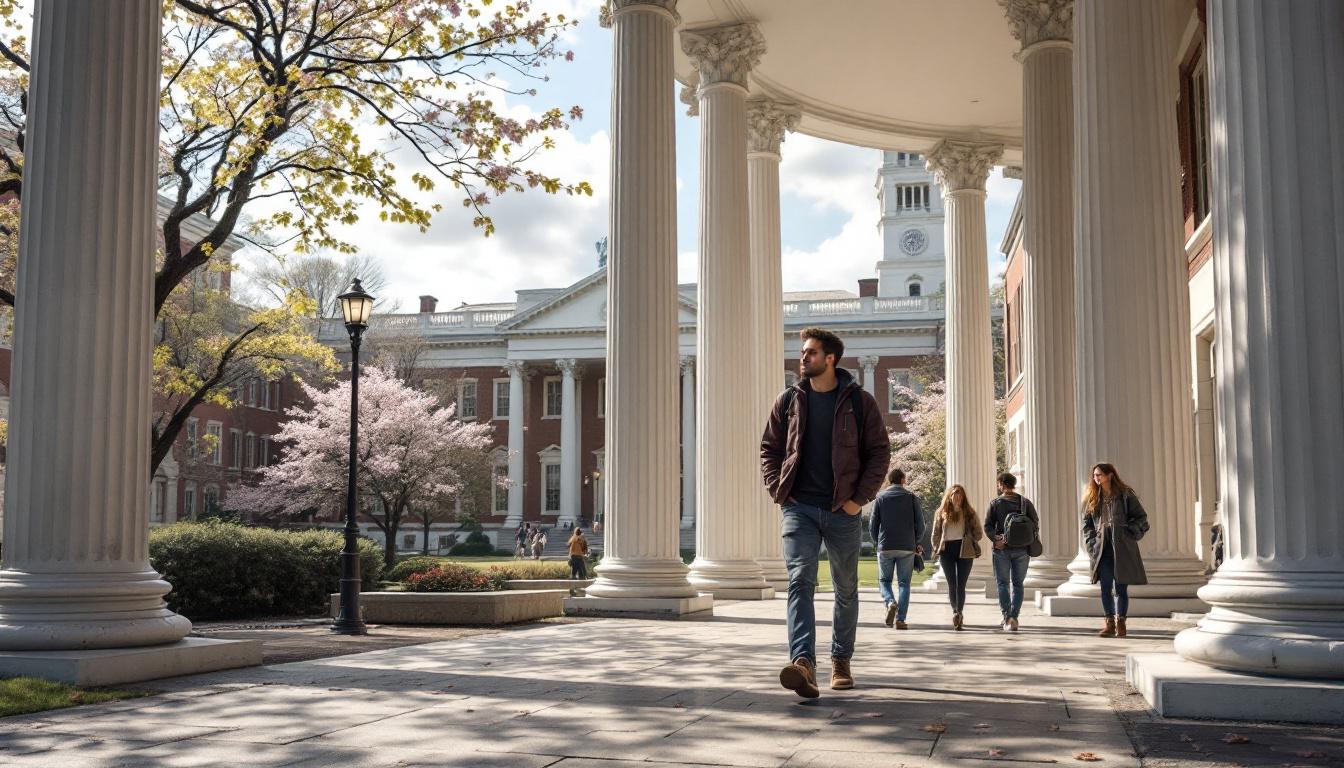
And then a federal judge in Boston looked at that completely reasonable request and said, “Nah, you asked too fast.” That’s it. That’s the ruling. Not that the government can’t collect the data. Not that universities have a right to hide it. Just that the Trump administration was too “rushed and chaotic” in how it rolled out the request. A federal judge literally ruled that catching lawbreakers is fine in principle, but the paperwork wasn’t filed with enough bureaucratic grace.
U.S. District Court Judge F. Dennis Saylor IV — a George W. Bush appointee, by the way, so don’t let anyone tell you this is just an Obama judge problem — issued a preliminary injunction last Friday blocking the data collection for public universities in 17 states. Those 17 states, shockingly, are all represented by Democratic attorneys general who filed the lawsuit. Because of course they did.
Let’s be very clear about what’s happening here. The Supreme Court said colleges can’t use race in admissions. Colleges almost certainly are still using race in admissions — anyone who’s looked at the acceptance rates at elite universities since 2023 and compared them to the demographic data knows something doesn’t add up. Trump said, “Prove you stopped.” And 17 Democratic AGs said, “How dare you ask.”
That’s not a legal argument. That’s a cover-up with a briefcase.
The states claim the data collection “risks invading student privacy” and could lead to “baseless investigations.” Read that again slowly. They’re arguing that asking universities to report aggregate admissions statistics — not individual student names, not Social Security numbers, just the raw numbers — invades privacy. By that logic, every census the government has ever conducted is a civil rights violation. Every Bureau of Labor Statistics report is an invasion of privacy. They don’t actually believe this. They just don’t want anyone looking at the numbers because the numbers will prove what we all already know.
Education Secretary Linda McMahon had originally set a March 18 deadline for universities to submit the data, with the requirement that it be disaggregated by race and sex and reported retroactively for the past seven years. The judge’s issue wasn’t with the data itself — he essentially admitted the federal government “likely has the authority” to collect it — but with the 120-day timeline, saying it didn’t give the National Center for Education Statistics enough time to go through a proper notice-and-comment process with the universities.
Translation: the government has every right to catch cheaters, but it needs to give the cheaters more time to prepare their answers first. Very helpful.
This is the playbook, folks. We’ve seen it a hundred times. The left loses at the Supreme Court, so they shift to delay tactics in lower courts. They can’t win on the merits — the law is crystal clear that race-based admissions are illegal — so they win on process. File a lawsuit claiming the enforcement mechanism was too hasty. Find a sympathetic judge. Get an injunction. Stall for months or years while universities quietly keep doing exactly what they were doing before.
And the universities themselves? They’re not exactly rushing to prove their innocence. If Harvard and Yale and all the rest were genuinely complying with the Supreme Court’s ruling, they’d be tripping over themselves to hand over the data. “Here you go, everything’s clean, see for yourself.” Instead, they’re hiding behind 17 state attorneys general and a judge who thinks the problem is that Trump asked too quickly.
Innocent people don’t fight this hard to avoid an audit.
The good news is that this injunction is temporary and narrow — it only applies to public universities in those 17 states, and the judge’s own ruling acknowledges the government’s authority to collect this data. The Trump administration can come back with a revised timeline, jump through the bureaucratic hoops, and demand the same information. It’ll just take longer, which is exactly what the left wanted.
But here’s what they can’t stop: the conversation. Every parent in America who watched their kid get passed over for a college spot they earned is now paying attention. Every taxpayer funding these universities is asking why schools that receive billions in federal money think they’re above proving they follow the law. The data is coming, one way or another. The only question is whether these universities will still have their stories straight by the time it arrives.
The Supreme Court said the game is over. The universities kept playing. Trump tried to check their cards. And a judge in Boston told him to wait his turn.
We’re not waiting. And neither is this administration.