
In the ever-changing landscape of American politics, it is crucial to discern fact from fiction, especially when it comes to the leaders who hold sway over the lives of millions. California Governor Gavin Newsom has often been portrayed as a moderate centrist, a label that investigative journalist Susan Crabtree has decisively challenged. In her thorough examination of Newsom’s career and political connections, Crabtree dismantles the narrative of moderation, revealing a portrait of a leader deeply intertwined with influential figures and ideologies that stray far from the center.
Gavin Newsom’s political ascent is not a tale of humble beginnings or grassroots support. Instead, it is marked by strategic connections and familial ties that have played a significant role in his rise to power. One cannot overlook the influence of figures like Willie Brown, a former San Francisco mayor, whose political shadow stretches long over both Newsom and Vice President Kamala Harris. These connections are not just mere acquaintances but are foundational elements that have propelled Newsom’s career forward, painting a picture of a politician deeply embedded within a network that champions progressive and, at times, radical agendas.
A closer look at Newsom’s policies further dispels the myth of his centrism. His unwavering support for the California Department of Education’s guidance on gender transition in schools is a prime example. This policy, which aligns with the more progressive spectrum of the political landscape, highlights Newsom’s commitment to initiatives that many traditionalists find concerning. The push for such policies raises alarms about the erosion of parental rights and the influence of ideological agendas in educational settings.
Newsom’s wife, Jennifer Siebel Newsom, also plays a role in shaping the narrative through her documentaries focused on masculinity and gender issues. These works, while artistic and thought-provoking, echo the underlying themes of a progressive agenda that seeks to redefine societal norms and values. Such endeavors, though seemingly independent, are part of a larger ideological tapestry that challenges traditional American values.
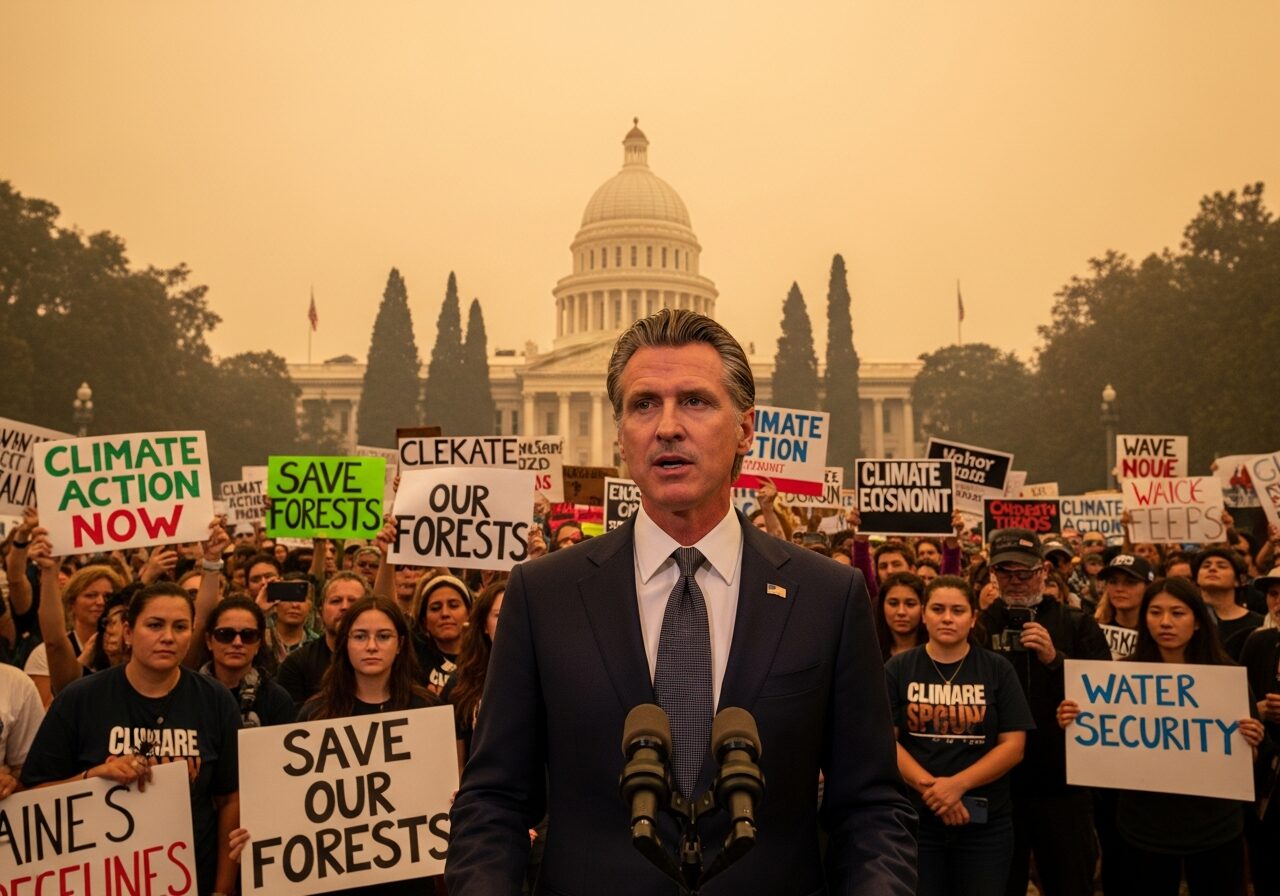
Critics like Susan Crabtree have not only questioned Newsom’s political stance but also his effectiveness as a leader. Under Newsom’s governance, California has faced a myriad of challenges: rampant wildfires, skyrocketing insurance and energy rates, burdensome taxes, and education systems that struggle to meet national standards. California’s poverty levels remain a blight on Newsom’s record, contradicting the image of a successful and equitable state.
Perhaps most telling is the situation with homelessness in California. Despite significant financial resources allocated to tackle this issue, the homeless population continues to grow, casting doubt on Newsom’s ability to address one of the state’s most pressing crises. This lack of tangible outcomes speaks volumes about the effectiveness of his leadership and the policies he champions.
Furthermore, the specter of fraud looms large over Newsom’s administration, raising questions about accountability and governance. These issues, if not addressed, could have serious political ramifications as Newsom eyes future campaigns.
In these times of uncertainty, it is imperative that we hold our leaders accountable and demand transparency in their actions and affiliations. The narrative of Gavin Newsom as a moderate centrist does not withstand scrutiny when examined through the lens of his connections, policies, and the challenges faced by California under his leadership. As Americans, we must remain vigilant, ensuring that our leaders uphold the values and principles that have long been the foundation of our great nation.
As we navigate the complexities of modern governance, let us look to leaders who embody the spirit of true moderation and effective leadership, rather than those who merely wear the guise of centrism while advancing agendas that threaten the core of our American way of life.