
For generations, Americans have cherished the simple idea that we are a free people. We are a nation built on liberty, privacy, and the belief that the government serves the people—not the other way around. But today, a quiet and troubling change is taking place across the land. It comes not with the loud bang of revolution, but with the soft click of a camera and the quiet hum of a database. It is called Real ID, and it threatens to turn our free society into a watched society.
To many, the Real ID might look like just another driver’s license. It has a star on it and lets you board airplanes or enter federal buildings. But behind that little card lies something much bigger and far more dangerous. According to experts like Twila Brase, president of Citizens’ Council for Health Freedom, Real ID is not really a state-issued license. It’s a federal identification card disguised as a local one. And it connects to a national database, shared across all 50 states, that stores personal details for millions of Americans.
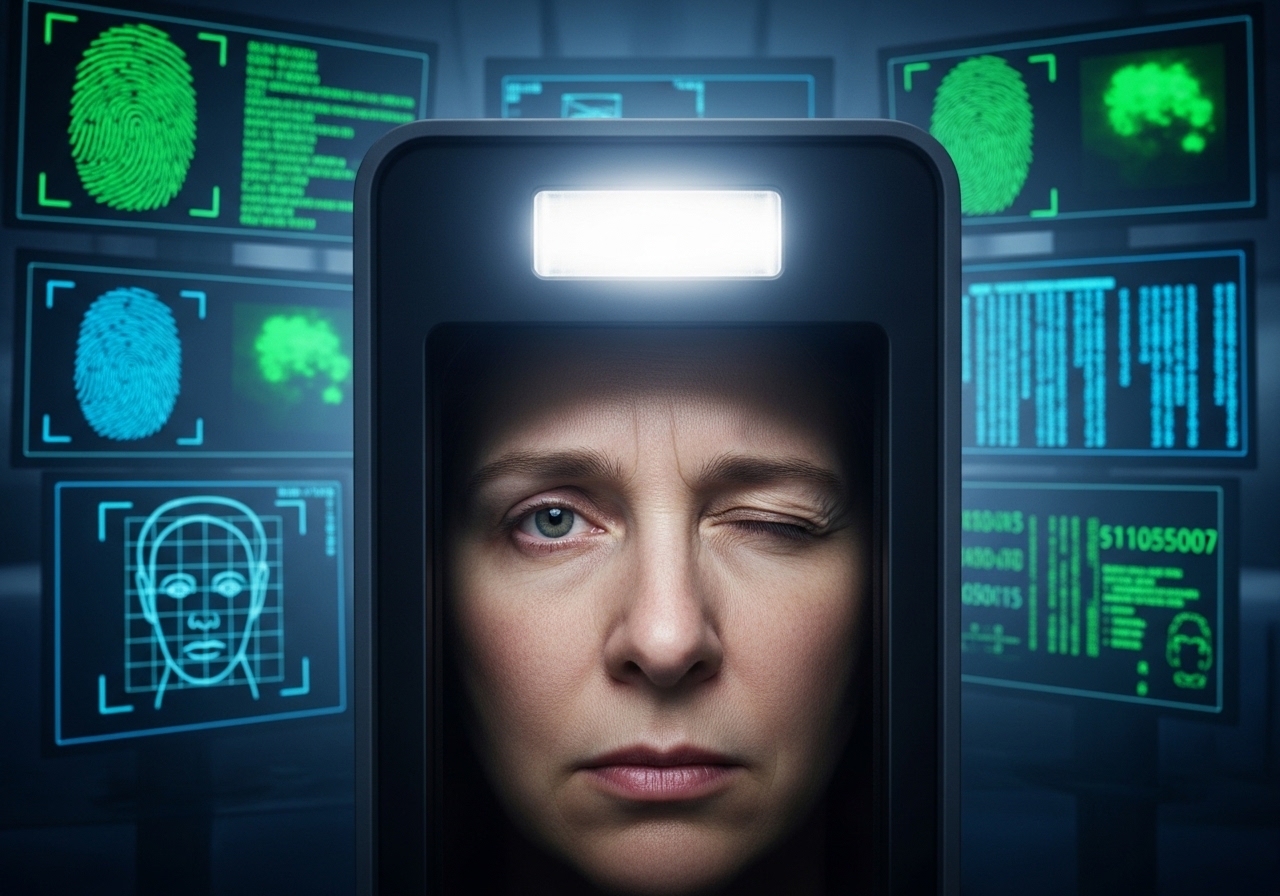
What kind of information? Everything from your photo and Social Security number to your passport, birth certificate, and possibly more in the future—like fingerprints, DNA, and even scans of your eyes or voice. Homeland Security already collects these kinds of biometric details from immigrants. Many fear it is only a matter of time before American citizens are forced to give up the same.
Former Congressman Ron Paul said it best: Real ID does nothing to make us safer—but it does a lot to take away our liberty. This system, he warns, could be the final step in turning America into a “total surveillance society.” In such a world, government agents could know where you are, what you’re doing, and even what you’re thinking—just by watching your movements and collecting your digital trail.
And the technology is already here. The Transportation Security Administration now uses facial recognition to scan travelers at airports. Americans traveling to Europe are fingerprinted and photographed. Foreigners entering our country will soon face the same. Companies like Idemia, which works with over 600 government agencies, are building kiosks that gather facial scans and fingerprints in states like Pennsylvania and Colorado. These are spreading fast. By 2026, they’ll be in at least ten states.
Some may ask, “What’s the harm if you have nothing to hide?” But that question misses the point. In a free society, the burden is not on the citizen to prove innocence. It is on the government to respect our privacy. Our Constitution was written to limit government power, not to make the people easier to track.
Real ID was born after the tragedy of September 11, 2001, when fear gripped the nation. But fear should never be the foundation of permanent laws. At that time, half the states refused to comply. But the federal government pushed back, threatening to bar citizens from flying if their states didn’t submit. Grants were handed out to encourage state motor vehicle offices to play along. As attorney Scott St. John put it, “Rather than holding a gun to the head of the state, it’s holding a gun to the state’s populace.”
Thankfully, some leaders are beginning to push back again. In Michigan, State Rep. James DeSana has introduced a bill to end Real ID in the state. Oklahoma is offering residents the option to opt out. Ten other states are considering similar paths. These are signs of hope—proof that not all public servants have forgotten who they work for.
But the push toward digital ID continues. Already, 20 states allow digital driver’s licenses on smartphones and watches. While this may seem convenient, it also allows the government and private companies to track your location and behavior through cell towers and apps. In China, digital ID is now required just to use the internet. Do we really want to follow their lead?
The time has come to ask ourselves: Are we still a free republic, or are we becoming something else? Real freedom means being able to live your life without being watched. It means having rights that no government can take away—not with a law, not with a database, and not with a fingerprint scanner.
We must stand firm, say no to Real ID, and return to the values that made America strong: freedom, privacy, and trust in the people—not in the power of the state.