
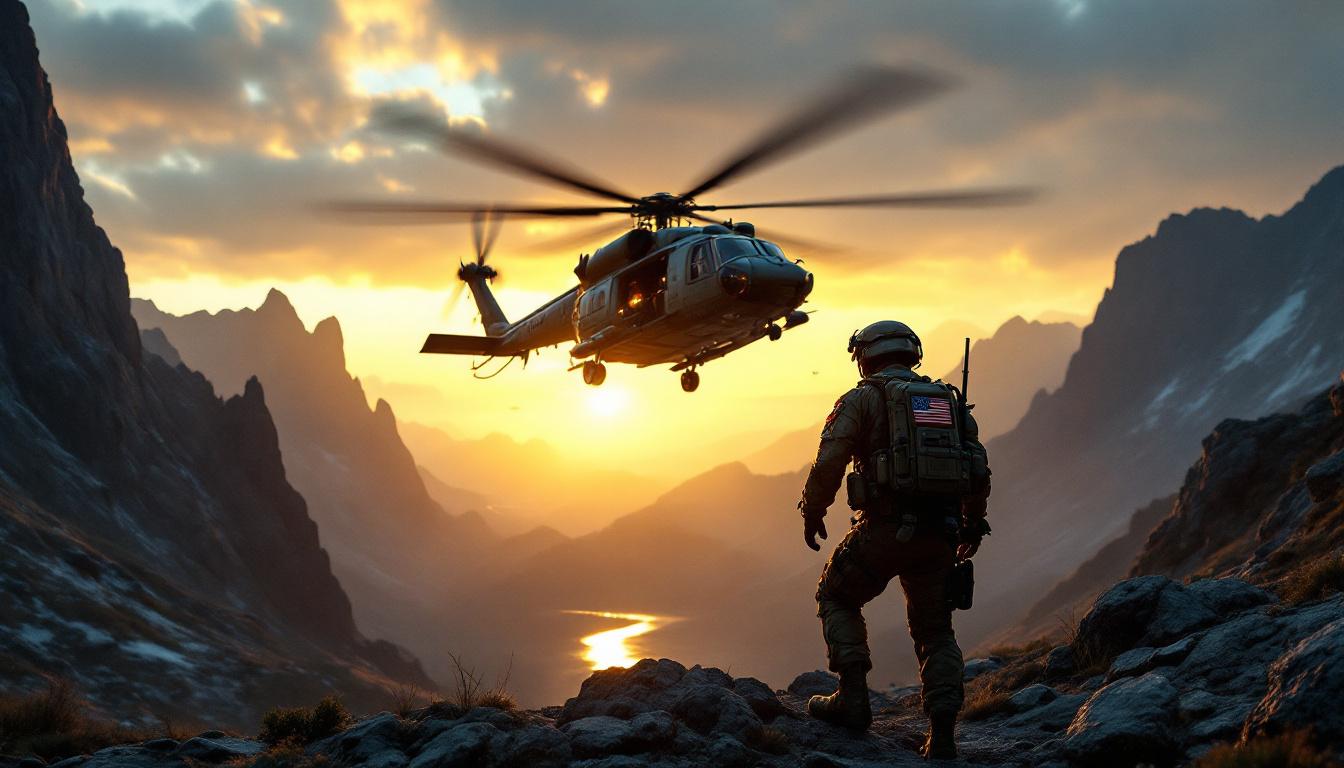
An American airman was stranded in Iranian territory, wounded and fighting for his life, while hundreds of special operators — Delta Force, SEAL Team Six, CIA operatives running deception campaigns — worked to bring him home. And someone in Washington decided that was the perfect time to call a reporter.
Let that sink in for a second.
An F-15E fighter jet was shot down over Iran on Friday. Two crew members were aboard. The first was recovered within hours. The second was stranded deep in hostile territory, injured, with an entire enemy nation between him and safety.
The U.S. government wanted to keep the second airman’s existence a secret for one obvious reason: so Iran wouldn’t know to look for him. That’s not complicated. That’s not a gray area. That’s a man’s life.
Then someone leaked it. Israel’s Channel 12 broke the story first. Axios picked it up. The Washington Post ran with it. And suddenly the entire country of Iran knew there was an American pilot hiding somewhere in their territory.
Iran’s response was immediate. They put out a bounty. They encouraged civilians to hunt for him. A wounded American serviceman went from being a covert rescue operation to being a nationally advertised manhunt — because someone in Washington wanted to see their name in a reporter’s phone.
President Trump was volcanic at his Monday press conference. “We’re looking very hard to find that leaker,” he said. “They basically said that we have one, and there’s somebody missing. Well, they didn’t know there was somebody missing until this leaker gave the information.”
Then came the line that should make every leaker in Washington reach for their lawyer’s number: “We’re going to go to the media company that released it, and we’re going to say, ‘National security. Give it up or go to jail.’”
The rescue operation ultimately succeeded. Hundreds of American military and intelligence personnel pulled it off — Delta Force operators, SEAL Team Six, and CIA operatives who mounted a deception campaign to throw the Iranians off the trail. They saved that airman’s life despite someone in their own government trying to get him captured or killed.
Think about that chain of events. Our best operators are risking their lives behind enemy lines. A CIA team is running a deception operation to keep the Iranians looking in the wrong direction. And some bureaucrat or political appointee picks up the phone and tells a reporter everything, rendering the deception useless and putting a bounty on an American’s head.
This isn’t a policy disagreement. This isn’t whistleblowing. This is someone who prioritized their relationship with a journalist over the life of a man in uniform. There is no version of this where the leaker didn’t know exactly what they were doing. They knew the pilot was missing. They knew the rescue was underway. They knew publication would tip off Iran. They leaked anyway.
We’ve watched leaks damage administrations for decades. We’ve watched classified information show up in newspapers like it was a press release. Most of the time, the damage is political — embarrassing, maybe harmful to negotiations, but nobody dies. This one is different. This one had a man’s life hanging in the balance, and the leaker rolled the dice with it for a news cycle.
Trump is right to go after this one with everything he has. “Give it up or go to jail” isn’t authoritarian. It’s the bare minimum response when someone nearly gets an American serviceman killed for a byline.
Find the leaker. Prosecute the leaker. And make the example loud enough that the next person who thinks about trading a soldier’s life for a scoop puts the phone down.