
A year after losing the White House, Senate, and any credible claim to a policy mandate, the Democratic Party finds itself staring at a 2028 presidential field that raises a question no one in the party wants to answer out loud: who exactly do they have?
The polling data available so far does not offer a reassuring answer.
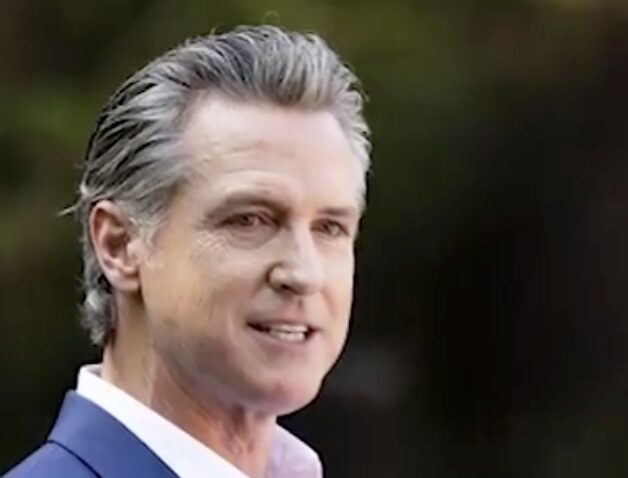
In California — the largest Democratic state in the country, the state that was supposed to be Kamala Harris’s unassailable floor — a new UC Berkeley/Politico survey shows Harris running fourth in the 2028 presidential primary with 14 percent. Gavin Newsom leads at 28. Alexandria Ocasio-Cortez sits at 12. Pete Buttigieg at 11. The woman who was the Democratic nominee for president four months ago is losing by 14 points in the state she represented in the Senate for six years.
Among the party’s own policy influencers — the donors, activists, and organizers who actually shape primary outcomes — Harris receives 2 percent. Newsom gets 17.
Nationally, Harris leads Democratic primary polling at around 31 percent, which sounds more impressive until you remember that 31 percent of your own party supporting you is not a foundation. It is a ceiling. And it is the ceiling belonging to a candidate who just lost to Donald Trump by a margin that ended the political careers of everyone who championed her nomination.
Here is the number that tells the real story: 59 percent of California Democrats say they are not excited about Gavin Newsom as a presidential candidate.
The same poll that shows Newsom beating Harris by 14 points in California also shows that a clear majority of California Democrats are unenthusiastic about him. He is the frontrunner in the most Democratic state in the country, and most Democrats there don’t want him.
Fifty-nine percent not excited about Harris. Fifty-nine percent not excited about Newsom. The two most famous Democrats in America cannot generate majority enthusiasm in their own party — in their own state — four months after losing the presidency.
Behind them, the options do not improve. Alexandria Ocasio-Cortez has never won a race outside of her deep-blue Bronx congressional district. Pete Buttigieg lost the 2020 primary without winning a single state outside of Iowa, has no statewide electoral record, and spent four years as Transportation Secretary during a period of transportation chaos that his party cannot credibly run away from. Neither has demonstrated the coalition-building capacity that competitive general election politics demands.
The honest answer to “who do Democrats have for 2028” is: nobody your side needs to fear right now. That could change — two years is a long time, unknown candidates emerge, circumstances shift. The appropriate response is not complacency.
But the structural reality is this: the Democratic Party is entering a cycle without a consensus frontrunner who can excite its base, with its most famous candidate losing her home state by double digits, with no obvious next generation ready to step up, and with a party infrastructure still being sorted out after a historic loss.
They will find someone. They always do. But the person they find will be starting from a deficit of enthusiasm, a fractured coalition, and a policy record — open borders, urban crime, inflation, energy costs — that Trump just spent two years making a national referendum on.
And they’ll be up against some of the strongest Republican candidates the party has had in a decade. Whether its JD Vance or Marco Rubio, both have extremely high favorability scores with Republican voters and recent pol
The 2028 Democratic primary is still two years away. On current evidence, it is a race between a woman who lost California and a man California isn’t excited about — with two longshots trailing at 12 and 11 percent respectively.
Republicans should take nothing for granted. But they can afford to sleep reasonably well tonight.